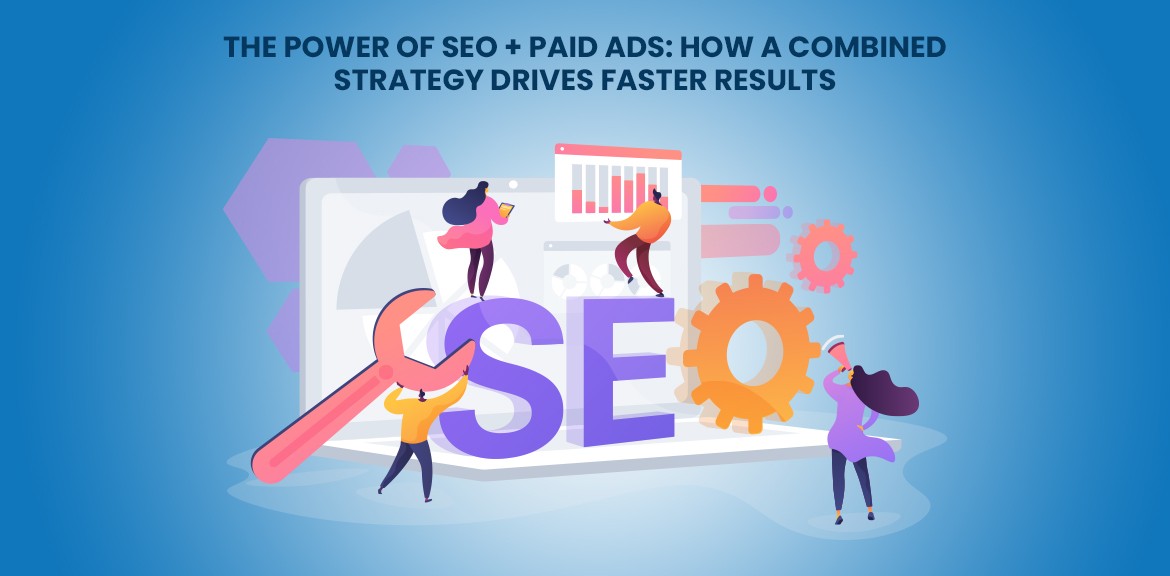
In today’s competitive digital landscape, relying on a single marketing channel is no longer enough. Brands that grow consistently don’t choose between organic visibility and paid promotion—they use both together. A well-planned SEO and Paid Ads strategy helps businesses capture demand at every stage of the buyer journey, delivering faster and more sustainable results.
While SEO builds long-term authority and trust, paid advertising drives immediate visibility and conversions. When executed together, they form a powerful integrated digital marketing strategy that maximizes reach, improves efficiency, and accelerates growth.
This blog explains how combining SEO and paid ads works, why it outperforms standalone efforts, and how businesses can use this approach to dominate search results.
Understanding SEO and Paid Advertising
What Is SEO?
Search Engine Optimization (SEO) focuses on improving a website’s visibility in organic search results. It involves:
Keyword research and content optimization
Technical SEO (site speed, mobile usability, indexing)
On-page optimization (titles, meta descriptions, internal linking)
Authority building through backlinks
SEO takes time but delivers compounding results. Once rankings are achieved, organic traffic continues without paying for each click.
What Are Paid Ads?
Paid advertising (PPC) includes platforms like Google Ads and social media ads where businesses pay for visibility. These ads appear instantly and can be targeted by:
Keywords
Location
Demographics
Intent and behavior
Paid ads generate immediate traffic and are ideal for promotions, launches, and competitive keywords.
SEO vs Paid Advertising: Why Choosing One Limits Growth
The debate around SEO vs paid advertising often misses the point. Each channel has strengths and limitations:
SEO | Paid Advertising |
Long-term traffic | Instant visibility |
High trust and credibility | Full control over targeting |
Lower cost over time | Pay-per-click model |
Slower initial results | Traffic stops when budget stops |
Businesses that rely only on SEO may lose short-term opportunities, while those depending only on paid ads face rising costs and unstable returns. This is why combining both is no longer optional—it’s strategic.
Why SEO and PPC Together Deliver Faster Results
Using SEO and PPC together creates synergy across marketing efforts. Here’s how the combination works:
1. Full Search Engine Visibility
When your brand appears in both paid ads and organic listings, it occupies more real estate on the search engine results page. This increases:
Brand recall
Click-through rates
User trust
Users often see organic listings as credible and paid ads as convenient. Showing up in both strengthens authority.
2. Faster Keyword Wins
SEO takes time to rank for competitive keywords. Paid ads allow you to target those same keywords immediately. Meanwhile, SEO content builds in the background. Once organic rankings improve, paid budgets can be optimized or reduced.
This balance is central to a strong organic and paid traffic strategy.
3. Smarter Keyword & Content Insights
Paid ads provide real-time performance data:
High-converting keywords
Best ad messaging
User intent patterns
These insights can directly inform SEO content strategy, helping prioritize keywords that actually convert—not just those with high volume.
Building an Integrated Digital Marketing Strategy
An effective integrated digital marketing strategy aligns SEO and paid ads under one goal: growth with efficiency.
Step 1: Unified Keyword Research
Instead of separate keyword lists for SEO and PPC:
Identify high-intent keywords for ads
Use informational keywords for SEO blogs
Share performance data between both teams
This avoids duplication and improves ROI.
Step 2: Align Landing Pages
SEO content educates users, while paid ads convert them. When both drive traffic to optimized landing pages:
Bounce rates reduce
Conversion rates improve
Quality Scores increase (lowering ad costs)
Step 3: Retarget Organic Visitors With Paid Ads
Not all organic visitors convert on the first visit. Paid ads help retarget:
Blog readers
Service page visitors
Cart abandoners
This closes the loop between discovery (SEO) and conversion (PPC).
How SEO Supports Paid Ads Performance
SEO doesn’t just drive free traffic—it actively improves paid advertising outcomes.
Better Quality Scores: SEO-optimized landing pages improve relevance
Lower Cost Per Click: Higher Quality Scores reduce CPC
Stronger Ad Messaging: SEO content reveals what users respond to
Together, this makes your SEO and Paid Ads strategy more cost-effective and scalable.
How Paid Ads Strengthen SEO Efforts
Paid ads also contribute back to SEO:
Identify keywords worth ranking for organically
Test headlines and CTAs before using them in SEO titles
Drive traffic to new pages while SEO rankings develop
This feedback loop helps refine long-term content strategies.
Organic and Paid Traffic Strategy for Sustainable Growth
A balanced organic and paid traffic strategy ensures stability in volatile markets.
SEO protects against rising ad costs
Paid ads protect against ranking fluctuations
Combined traffic sources reduce dependency on one channel
Businesses that diversify traffic sources outperform those that rely on a single acquisition method.
Common Mistakes to Avoid
Treating SEO and paid ads as separate silos
Ignoring paid search data when planning SEO content
Using different landing pages for the same keyword intent
Chasing traffic instead of conversions
Alignment is what unlocks real performance.
FAQs: SEO and Paid Ads Strategy
1. Is SEO better than paid ads?
SEO and paid ads serve different purposes. SEO builds long-term visibility, while paid ads deliver immediate results. The best approach combines both.
2. How long does SEO take compared to paid ads?
SEO typically takes 3–6 months to show strong results, while paid ads can generate traffic immediately after launch.
3. Should small businesses use SEO and PPC together?
Yes. Even with limited budgets, combining SEO with targeted paid ads improves efficiency and reduces long-term acquisition costs.
4. Can paid ads help SEO rankings?
Paid ads do not directly affect rankings, but they provide data and traffic that indirectly support better SEO decisions.
5. What industries benefit most from an integrated strategy?
E-commerce, SaaS, real estate, education, healthcare, and local services benefit significantly from combining SEO and paid advertising.
Conclusion: Why the Combined Approach Wins
In a digital environment where competition grows daily, speed and sustainability matter. A unified approach combining SEO and PPC enables businesses to capture immediate demand while building long-term authority.
The smartest brands don’t choose between organic and paid—they integrate them. With the right execution, an integrated digital marketing strategy becomes a growth engine that delivers faster results today and stronger visibility tomorrow.
Reviewed by: TechInfinity Content Team
Last Updated:
This article follows our Editorial Policy and Content Review Process to ensure accuracy and relevance.