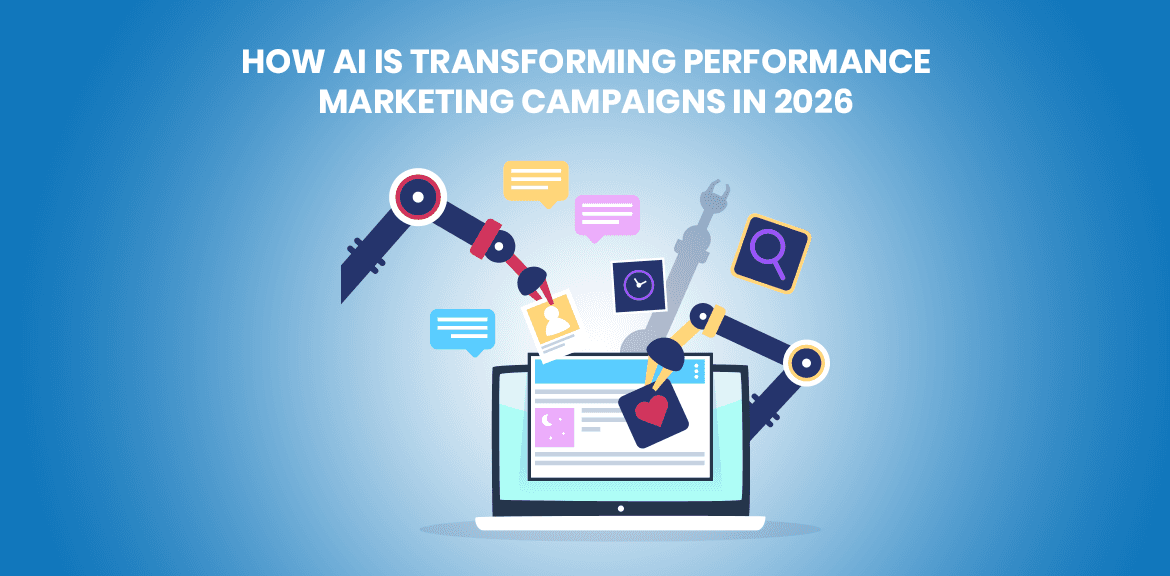
Performance marketing has never been a patient game. You launch a campaign, watch the numbers, tweak, kill, scale, and repeat. What's changed in 2026 is that marketers aren't doing most of that work on their own anymore. Artificial intelligence now sits inside almost every paid channel, every attribution model, and every creative pipeline, making decisions faster than any human ever could.
And honestly, the shift is no longer subtle. Brands still running campaigns the "2022 way", manual bidding, static audiences, and generic creatives are quietly falling behind. The ones pulling ahead have one thing in common: they treat AI not as a fancy add-on but as the backbone of their growth strategy.
Here's a closer look at how AI in performance marketing is reshaping the space right now.
What's Actually Changed in 2026
The biggest change isn't flashy. It's structural.
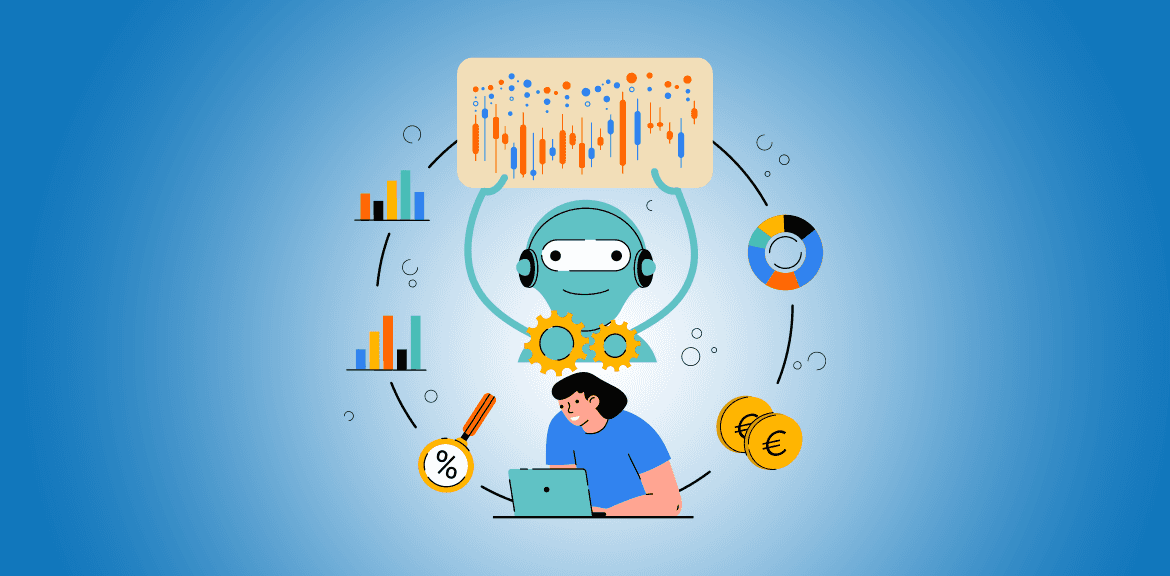
A few years ago, running a paid campaign meant building audiences by hand, writing copy variants, uploading creatives, and then spending hours inside ad managers adjusting bids. In 2026, most of that happens automatically. Platforms like Google Performance Max, Meta Advantage+, Amazon DSP, and TikTok Smart Performance use real-time signals – user intent, device behaviour, purchase probability, and dynamic pricing – to decide who sees which ad, when, and at what cost.
Marketers have shifted from being button-clickers to strategists. The job now is to feed AI the right inputs: clean first-party data, strong creative assets, and sharp offers. If those inputs are weak, no algorithm can save the campaign.
AI Marketing Automation Tools Running the Show
The stack has matured. Modern teams aren't just using one or two tools; they're stitching together an ecosystem.
Popular AI marketing automation tools in 2026 include HubSpot's AI Assistant, Jasper for creative generation, Adzooma and Madgicx for multi-channel ad optimization, Smartly.io for creative automation, and HockeyStack for AI-driven attribution. Each one handles a specific chunk of the funnel — from audience segmentation and email triggers to creative rotation and budget reallocation.
What makes this generation of tools different is that they talk to each other. A good setup can detect a drop in landing page conversions, automatically pause the underperforming ad set, swap in a new creative, adjust the Meta budget, and notify the team all within minutes. That kind of closed-loop automation simply wasn't possible two years ago.
For service-led brands and D2C companies, this translates into faster testing, lower CAC, and campaigns that get smarter the longer they run.
AI Advertising Strategies That Deliver in 2026
The winning playbook has evolved. A few AI advertising strategies standing out this year:
Predictive audience building. Instead of targeting "women, 25–40, interested in skincare", AI clusters users by predicted buying behaviour stitched from browsing patterns, CRM signals, and historical LTV. The targeting feels almost eerily accurate.
Generative creative at scale. Tools now produce hundreds of ad variants – videos, carousels, scripts, and product mockups — tailored to different audience segments. The creative fatigue that used to kill campaigns in week three has mostly disappeared.
AI-driven bid and budget optimization. Algorithms shift spend across Google, Meta, LinkedIn, and programmatic in near real-time based on conversion probability, not static rules.
Conversational ads. With AI chat agents embedded into ad units, users get product answers before they even click which has pushed conversion rates up noticeably for e-commerce and service businesses.
Brands combining these strategies with clear measurement are seeing the biggest jumps in ROAS.
Machine Learning in Digital Marketing: The Engine Behind the Results
All of this is possible because of one thing: machine learning in digital marketing has quietly become the standard, not the exception.
Every time an ad is served, a click is recorded, or a purchase is made, ML models learn a little more about what works. Over time, they spot patterns humans miss, which day of the week certain segments convert better, which creative hook lands with first-time visitors, and which offer works best in Tier-2 cities. The result is campaigns that don't just run; they improve on their own.
Of course, ML is only as good as the data feeding it. Brands that invest in clean analytics, proper event tracking, and privacy-compliant data collection will always outperform those chasing the shiniest new tool.
Why Brands Are Partnering with AI-First Agencies
Most in-house marketing teams don't have the bandwidth or the expertise to keep up with every new AI feature Meta, Google, or TikTok rolls out each quarter. That's why more businesses are leaning on specialized performance marketing partners who live inside these platforms daily.
A capable agency brings three things: the right AI tool stack, the data hygiene to make it work, and the strategic eye to know when the algorithm is wrong. Agencies like TechInfinity have built their performance marketing practice around exactly this blend, combining AI-driven execution with human judgement to deliver measurable growth across paid media, SEO, lead generation, and analytics.
FAQs
1. How is AI used in performance marketing today? AI powers audience targeting, bidding, creative generation, budget optimization, and attribution across platforms like Meta, Google, and TikTok — making campaigns faster, cheaper, and more accurate.
2. Which AI marketing automation tools are worth using in 2026? Popular picks include HubSpot AI, Jasper, Smartly.io, Madgicx, Adzooma, and HockeyStack. The right combination depends on your funnel, channels, and data maturity.
3. Do small businesses really benefit from AI advertising? Yes. In fact, small teams benefit the most — AI removes the need for large ops teams and lets lean brands compete with much bigger spenders.
4. Is machine learning replacing digital marketers? No. It's replacing manual tasks. Strategy, brand voice, creative direction, and measurement still need humans. The role just gets sharper.
5. How can I start using AI in my campaigns? Audit your data and tracking, pick one or two AI tools that match your stack, run structured tests, and work with a performance marketing partner if you need to move fast.
Reviewed by: TechInfinity Content Team
Last Updated:
This article follows our Editorial Policy and Content Review Process to ensure accuracy and relevance.