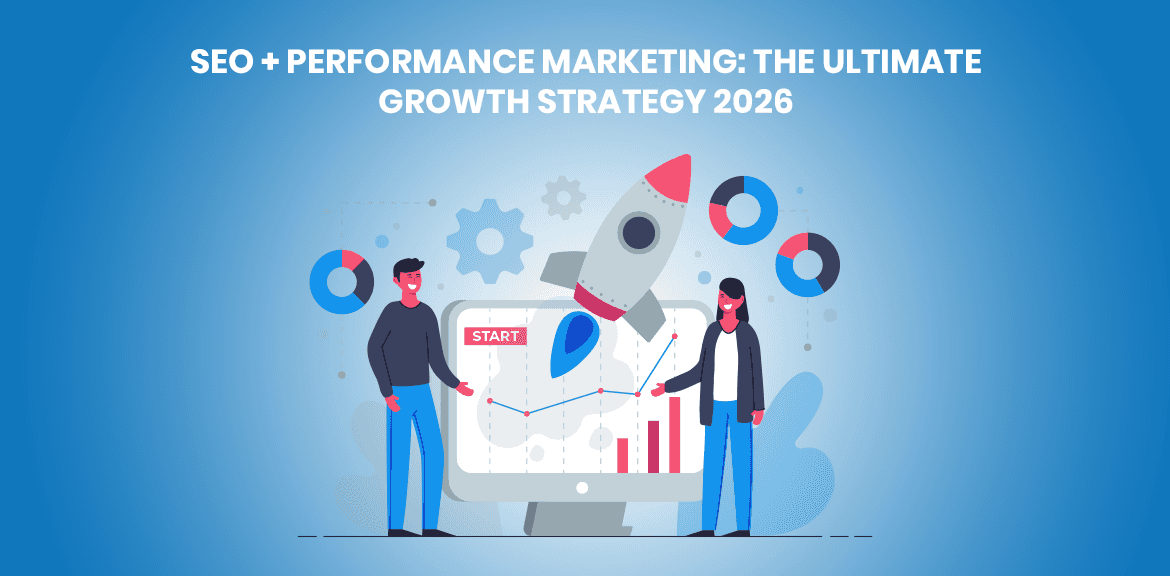
If you've been running marketing for any real length of time, you've probably sat through that same boardroom argument. One side is pushing for SEO because "organic is free and compounds". The other is pushing for paid ads because "we need leads this quarter, not next year". Both are right. Both are also wrong when they exist in silos.
In 2026, the brands actually pulling ahead aren't picking sides. They're stitching the two together into a single growth engine, where search visibility feeds the paid funnel and paid campaigns teach the organic side what really converts. That's the shift worth paying attention to this year.
The Tired Debate: SEO vs Performance Marketing
Let's get the comparison out of the way first, because the SEO vs performance marketing conversation is honestly a bit dated.
SEO is a compounding asset. You invest in content, technical health, authority, and internal structure, and twelve to eighteen months later, you're ranking for terms that bring qualified traffic without spending a rupee per click. It's a slow build, but the moat is real.
Performance marketing, Google Ads, Meta, programmatic, LinkedIn, affiliate, and the whole paid universe are the opposite. Turn on spend; you will get clicks today. Turn it off; traffic disappears tomorrow. But you get data fast, you can test messaging at speed, and you can scale winning campaigns the moment they prove themselves.
The problem? Too many brands still treat these as competing line items in a budget. That's like asking whether a car needs an engine or wheels. You need both, and you need them talking to each other.
Why an Integrated Digital Marketing Strategy Wins in 2026
Here's what most agencies won't tell you upfront: Google's search results in 2026 look nothing like they did five years ago. AI overviews sit at the top, sponsored results have expanded, zero-click queries are now the norm for informational searches, and the real estate for an unpaid #1 position is genuinely shrinking.
That's exactly why an integrated digital marketing strategy is no longer a nice-to-have. It's how you actually show up.
When your SEO and paid teams work from the same keyword intelligence, the same audience data, and the same conversion signals, something interesting happens. Paid campaigns stop burning budget on terms you already rank organically for. SEO starts producing content around topics that paid search has proven to convert. Retargeting pools grow richer because organic traffic feeds them. And your cost per acquisition drops, sometimes significantly, because you're not paying twice to reach the same person.
We've seen e-commerce brands knock 30–40% off their blended CAC just by aligning what were once two separate playbooks.
Building an SEO and PPC Strategy That Actually Compounds
A solid SEO and PPC strategy isn't about splitting the budget 50/50 and hoping for the best. It's about mapping each channel to what it does best.
Start with shared keyword research. If PPC data shows "affordable CRM for small teams" has a 4% conversion rate, that's a goldmine for a pillar blog and for your product page's on-page SEO. Flip it the other way: if a long-tail blog post is quietly driving 800 visitors a month, test a paid campaign on the same intent to see if you can scale what's already working.
Then there's the brand-plus-performance overlap. Running Google Ads on your own branded terms feels wasteful until you realise competitors are bidding on them. A small, defensive paid budget protects the top spot while your SEO team fortifies the organic listing.
Landing pages deserve a mention too. Too many teams build PPC landing pages that are invisible to search engines and blog pages that ignore conversion best practices. A page that ranks and converts? That's where SEO and performance marketing stop being separate disciplines.
Full Funnel Marketing Strategy: Mapping Both to the Buyer's Journey
The real power move is thinking in terms of a full funnel marketing strategy rather than channel silos. Here's the rough mental model that tends to work:
The top of the funnel is where SEO shines. People searching "how to reduce warehouse costs" or "best productivity habits" aren't ready to buy. A well-ranked blog, video, or guide puts you in their consideration set early. Paid social supports this with awareness video ads, but the organic compounding matters most here.
The middle of the funnel is where the two channels handshake the hardest. Someone who read your blog now sees a retargeting ad for a case study. Someone who watched your video is now searching your brand name on Google. Programmatic display, YouTube ads, and comparison-intent SEO content all work together here.
The bottom of the funnel is performance marketing's territory. Search ads on high-intent terms ("buy", "pricing", "near me", "demo"), conversion-optimised landing pages, shopping ads, and remarketing. This is where you close. SEO still plays a role on product pages, category pages, and local pack listings, but paid tends to do the heavy lifting on conversions.
The brands winning in 2026 don't just run campaigns. They architect a funnel where every touchpoint, paid or organic, knows what the previous one said.
What This Looks Like in 2026 (Hint: AI Changes Everything)
A few shifts worth flagging. Generative AI search, whether it's Google's AI Overviews, Perplexity, or ChatGPT's answer engines, is reshaping how people find brands. Getting cited in those AI answers now matters as much as ranking in the classic blue links, which means your content has to be genuinely useful, well-structured, and trustworthy.
Meanwhile, performance platforms have gone fully AI-driven. Google's Performance Max, Meta's Advantage+, and similar products are making smart audience and creative choices on their behalf, but they still need clean conversion data, strong creative variety, and a healthy landing page experience to perform. That's where your SEO foundation and your paid spend quietly reinforce each other.
The Takeaway
If you're running marketing for a growing brand in 2026, whether you're D2C, B2B, SaaS, or a local service business, stop asking whether SEO or performance marketing deserves the bigger slice of budget. Start asking how they can feed each other.
A good growth partner or agency shouldn't hand you two separate decks for two separate channels. They should walk you through one strategy, one funnel, and one shared view of your customer. That's what separates marketing that merely spends from marketing that actually scales.
Frequently Asked Questions
1. Should I invest in SEO or performance marketing first?
If you need leads in the next 30–60 days, performance marketing gets you moving. But start your SEO groundwork in parallel with technical fixes, foundational content, and keyword research, so you're building equity from day one.
2. How do I know if my SEO and PPC strategy is actually integrated?
Three quick checks: Are both teams looking at the same keyword and conversion data? Do your paid landing pages also work for organic traffic? Is someone reviewing blended CAC, not just channel-level CPA? If you can't confidently say yes to all three, there's room to integrate better.
3. What's the typical budget split between SEO and paid in a full funnel marketing strategy?
There's no universal answer; it depends on your stage, category, and margins. Early-stage brands often lean 70/30 toward paid; established brands with strong domain authority sometimes flip to 40/60, favouring organic and content. The goal is efficiency, not symmetry.
4. Can a small business really run an integrated digital marketing strategy?
Absolutely. You don't need a 20-person team – you need clear priorities, a shared data source (Google Analytics and Search Console are solid starting points), and a willingness to kill what isn't working. Many SMBs actually integrate faster than enterprises because they have fewer silos.
5. How soon will I see results from combining SEO and performance marketing?
Paid starts producing leads within days. SEO compounds visibly around the 3–6 month mark. The blended ROI, where paid gets cheaper because organic is pulling its weight, usually shows up somewhere in months 4 to 6.
Reviewed by: TechInfinity Content Team
Last Updated:
This article follows our Editorial Policy and Content Review Process to ensure accuracy and relevance.